
Neighbour Check-Ins and Safety
UK guide
A practical guide to neighbour check-ins and everyday safety for older people living alone in the UK.
Everyday Safety and Check-Ins
A neighbour check-in is a practical form of informal contact.
Preferences and routines
An arrangement that suits one person may not suit another.
Red and green cards
The cards work only when the people involved agree what each colour means.
Personal alarm options
Personal alarms differ in how they connect to someone who can respond.
Everyday technology
Technology can make familiar routines easier to manage.
Everyday safety
Personal Alarms and Home Safety
- Wearable options
- Home and mobile use
- Response arrangements

Choosing an Approach That Fits
A useful support arrangement reflects the person’s preferences and practical realities.
Start with priorities
A helpful offer starts with the older person’s priorities, not assumptions about what they need.
Agree the check-in
Check-in services range from a neighbour or — including a look at casino Smash — relative making contact to a local organisation.
Fit the person’s routine
The right choice depends on what the person wants to do and which controls they can use comfortably.
Neighbour check-ins and everyday safety
A neighbour check-in is a practical form of informal contact that can help someone living alone feel connected. It may involve a brief conversation, a message or another method agreed by the people involved. Preferences, routines and support needs differ, so an arrangement that suits one person may not suit another. This guide also covers communication options and personal safety devices as part of everyday safety and community support for older people.
What a neighbour check-in means
A neighbour check-in is an informal arrangement for one person to make contact with another at an agreed time or as part of an ordinary routine. It could be a short visit, a phone call or a message asking how the person is doing. The purpose is friendly contact and reassurance, not a formal assessment of someone’s health or care needs.
For example, two neighbours might agree that one will knock on Tuesday mornings when they are usually at home. The arrangement depends on mutual agreement and what the person wants; it does not automatically give a neighbour responsibility for ongoing care. A check-in is not a clinical or emergency response service, and a neighbour may not be available or able to provide professional help.
Agreeing a useful routine
Choose contact times around the person’s usual day rather than imposing a fixed schedule. They may prefer a quick call after breakfast, a message in the afternoon or a brief doorstep visit on a day when both neighbours are generally at home. Agree how long to wait for a reply and which alternative contact method feels comfortable, such as a phone call if a text goes unanswered.
Make the arrangement clear to everyone involved: confirm the day, approximate time and preferred way to get in touch, then revisit it if work, health or daily routines change. A written note can help neighbours remember the agreed details, with the person’s permission. A check-in does not replace emergency services; if immediate help is needed, contact the appropriate emergency service rather than relying on the routine.

Red and green cards as a simple signal
Red and green cards for neighbour check-ins offer a simple visual way to show whether help is wanted or things are well. The cards work only when the people involved agree what each colour means. A card displayed in a window may be visible to a neighbour passing by, but it cannot guarantee that anyone will see it. Clear wording and an agreed alternative contact method can make the signal easier to interpret and use.
What the colours can signal
The red and green card idea is a simple visual way for neighbours to show whether they want help or things are well. A card placed in an agreed window can be seen from outside without requiring a conversation at the door. The meaning must be set between the people involved: one household might choose red for a request for help and green for all well, while another group could choose differently.
There is no universal red card green card welfare check code, so colour alone should not be treated as a definite message. Agree what the signal means in plain language, including what kind of response is expected. For example, a red card might mean that the resident would like their named neighbour to make contact, rather than indicating a particular emergency. A green card can communicate that things are well at the time it is displayed, not guarantee that circumstances will remain unchanged.
Agreeing and using the signal
Set out the practical details with the resident and the neighbours involved before relying on the cards. A few specific agreements can make a community wellbeing check card easier to interpret.
- Write down what each colour means, who should respond to a help signal, and how that neighbour should make contact.
- Choose a window or other visible place together, and agree the hours or days when a card is normally displayed.
- Use large, high-contrast words such as “HELP” and “ALL WELL” alongside colour for anyone with colour-vision or sight difficulties.
- Name a specific person to look for the signal, and agree who will cover if that person is away or cannot check.
- Agree what to do if no card appears or a displayed card goes unnoticed; absence alone does not confirm that help is needed.
A card can be obscured by curtains, poor light or a change in the usual view, and a passer-by may simply miss it. Treat the signal as one agreed way to communicate, with a separate contact method available if it is not seen.
Offering help to an older neighbour
A helpful offer starts with the older person’s priorities, not assumptions about what they need. A clear, low-pressure conversation can make it easier to ask for neighbour-to-neighbour assistance while keeping the person in control. Practical support might be a lift to a nearby shop, help carrying a delivery or an occasional garden task. Agreeing the limits of any offer from the outset helps both neighbours feel comfortable.
Starting a respectful conversation
Choose a quiet moment when neither of you is rushing, and speak directly rather than discussing the person’s needs with others first. You might say, “I’m going to the shops on Thursday; would it help if I picked anything up?” A specific offer is easier to answer than a broad promise to help with anything.
Use open questions to find out what would actually be useful: “Is there a small job that would make the week easier?” or “What kind of help would you prefer from a neighbour?” Give them time to answer, and listen without suggesting that age or living alone automatically means they need assistance. They may want help with one task but prefer to manage others themselves.
If they decline, accept the answer warmly: “Of course. If that changes, you can let me know.” Do not ask repeatedly, insist, or make the offer conditional on accepting other help. A friendly conversation can remain welcome even when no practical support is wanted.
Agreeing boundaries and practical support
Agree exactly what you can do and how often, rather than leaving an open-ended promise. For example, you might offer to carry shopping once a week or take bins out on a particular evening. Confirm whether the arrangement is temporary or ongoing, and let each other know if plans need to change.
Discuss privacy and contact preferences before support begins. Ask whether they would like you to knock, call or send a message, and agree suitable times; do not enter their home, handle post or share personal details without permission. Keep any arrangement within what you can reliably manage, including your own time and other responsibilities.
If the person’s needs become more than you can provide, explain this kindly and ask whom they would like involved. With their agreement, you could help them contact family, a local community group or the council’s adult social care service. Practical neighbour-support guidance from councils and established local organisations can help identify suitable options without making one neighbour responsible for ongoing care.

Personal alarms and ways to call for help
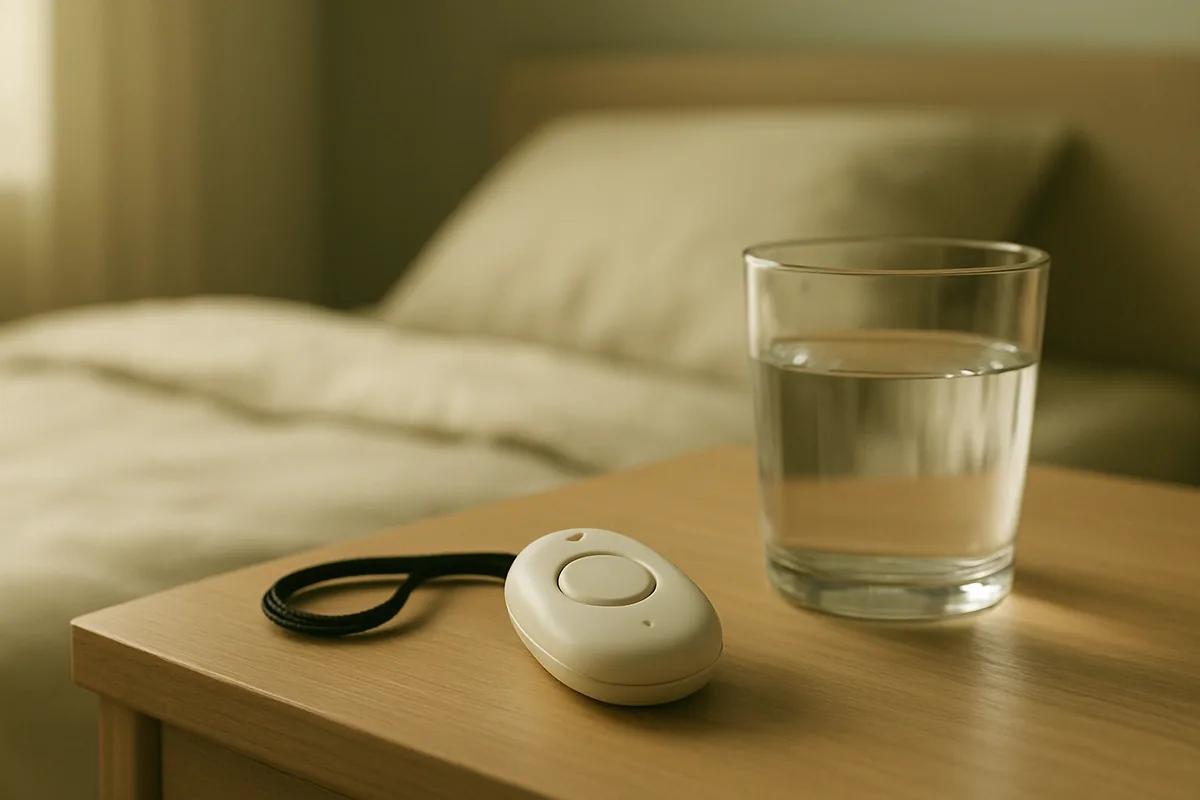
Personal alarms differ in how they connect to someone who can respond and whether they are designed for use at home, away from home or in both settings. Some send an alert to a monitoring service, while others contact people chosen by the user. The device may be a pendant, wrist-worn button, mobile unit or a combination of equipment. Compare the connection, intended setting and response route before choosing a type.
How personal alarm types differ
The main distinction is the route an alert takes: through a home unit to a response service, directly to chosen contacts, or through a mobile device. Wearable describes how an alarm is carried; it does not, by itself, identify who receives the alert.
| Type | Intended setting | Connection method | Typical responder | Relevant limitations |
|---|---|---|---|---|
| Home-based alarm | Primarily inside the home | A pendant or button signals a base unit, which uses a landline or mobile network to contact a response service. | A monitoring service operator may speak through the base unit and arrange the next step under the service’s process. | Range depends on the alarm and the home layout; the base unit needs power and a working connection. |
| Device contacting chosen people | Where the paired phone or connected device can be used | A button or app sends an alert through a smartphone or internet connection to contacts selected in advance. | Named family members, friends or neighbours receive the alert and decide how to respond. | Contacts need a working phone and must notice and act on the message; phone access and connectivity matter. |
| Mobile alarm | At home and, depending on the product, outside the home | A portable unit uses a mobile network; some models use location technology such as GPS to help identify where the user is. | A monitoring service or chosen contacts, according to the device and subscription or setup. | Mobile coverage, battery charge and the service’s geographic coverage affect use; location information may not be precise indoors. |
| Wearable alert device | At home or away, depending on the connected system | A pendant, wristband or watch button sends an alert to a base unit, phone or monitoring service. | The responder depends on the linked system: it may be a service operator or a chosen contact. | It must be worn and charged where required; fall detection, if included, can vary and should not be assumed to be present. |
These categories can overlap: a wearable pendant may be part of a home alarm, while a mobile alarm may also be worn. Check the product’s stated coverage, connection requirements and alert recipients rather than relying on its appearance or label. Use the choosing guide and type comparison to match those details to where the person spends time and who is available to respond.
What happens after an alert
An alert may travel from a button or sensor to a home base unit, paired phone or mobile alarm, then onward to a monitoring service or selected contacts. Depending on the setup, a responder may speak through the device, call the user back, contact another person or follow an agreed escalation process. The route and next steps are not identical across products. Before relying on an alarm, check who receives alerts, how they are notified, what happens if they do not answer and whether the device needs a subscription or a working phone connection. Confirm how the system handles a weak signal or a flat battery. A personal alarm can make it easier to request help, but no device guarantees that an alert will be received or acted on.
Technology for living alone
Technology can make familiar routines easier to manage, from remembering appointments to seeing a route through a dim hallway. The right choice depends on what the person wants to do and which controls they can use comfortably. Some devices work locally, while others rely on internet access, mobile coverage or mains power. Agreeing what to do if a device stops working is part of choosing it.
Everyday technology categories
Different tools can support distinct parts of an ordinary day. A useful starting point is to match each device to a routine the person already values.
- Mobile or cordless phones: Large buttons, clear displays or speakerphone functions can make calls easier; keeping a charged handset near a usual chair supports routine contact.
- Reminder tools: A calendar app, digital clock or voice reminder can prompt someone about a planned task, such as taking keys before leaving for an appointment.
- Lighting controls: A plug-in timer or motion-activated light can illuminate a hallway when someone usually gets up at night, without needing to find a wall switch.
- Motion sensors: A sensor can register movement in a chosen room; an agreed alert to a family member may prompt a check if expected activity changes.
- Door sensors: A contact sensor can record when a door opens, helping a person or agreed supporter notice a change in the usual pattern of outings.
These are options, not a package that everyone needs. Trying one device during the routine it is meant to support can show whether it is genuinely useful.
Usability, consent and reliability
The person who will use a device should choose it and know what it does before it is set up. Check practical details together: whether buttons are easy to press, text is readable, spoken prompts are clear, and controls can be reached without strain. A familiar mobile phone may suit someone who dislikes a new system; another person may prefer a simple physical timer. A demonstration at home can reveal problems that a product description will not. Explain what information a sensor records, who can see it, and when alerts are sent. Ask for clear, voluntary agreement before sharing activity data or giving another person account access; preferences can change, so revisit the arrangement if the device or household routine changes. Keep monitoring proportionate to the purpose, and avoid enabling features the person does not want. Connections and power can fail: a Wi-Fi sensor may stop sending alerts after a router outage, while a mains-powered light control may not work during a power cut. Check battery or connection indicators as part of ordinary use, and agree a non-digital fallback, such as a phone call at an agreed time. A device should support contact, not become the only route to it.
Check-in services and safe and well checks
Check-in services range from a neighbour or relative making contact to a scheme run by a local organisation. The person checking in may be known to the resident or assigned by a service. Each arrangement has its own agreed process, including how a check-in is recorded and what follows if contact does not happen. Confirm the current procedure directly with the service rather than assuming that every scheme offers the same support.
Informal and organised check-ins
An informal check-in is arranged directly between people who know one another, such as a neighbour agreeing to call or knock. It may suit someone who prefers familiar contact and a flexible arrangement. The people involved decide how they will keep track of whether contact has taken place; there may be no separate coordinator or written service procedure.
An organised check-in is delivered through a service or local volunteer scheme, with a provider or coordinator responsible for the arrangement. The service may specify who contacts the resident, how contact is recorded and what steps follow if a check-in is missed. These details, including operating hours and whether visits are offered, vary between providers. Ask the service directly for its current procedure and do not assume that a scheme provides monitoring or an immediate response unless it confirms this.
Questions about missed check-ins
Before relying on a service, ask for its missed-check-in procedure in clear, practical terms. Confirm the details with the provider and note any agreed steps.
Reducing isolation through everyday contact
Social connection can grow from ordinary, low-pressure moments rather than formal visits. A short conversation while bringing in a neighbour’s post or sharing a familiar activity may suit someone who prefers predictable contact. The person’s interests, energy and preferred amount of company should shape what is offered. Contact is most useful when it feels welcome, not like an obligation.
Making contact part of a routine
Ask what kind of contact feels comfortable and when it fits best. Someone who enjoys a morning walk might welcome a brief chat on the way, while another person may prefer a weekly cup of tea at home. Let the neighbour choose the activity, timing and length; a ten-minute conversation can be enough if that is what they want.
Familiar shared activities can make social contact feel natural. You could talk about a television programme, exchange gardening tips, or invite them to join a local craft or walking group, if they are interested. Agreeing a simple pattern, such as a chat after a regular Thursday activity, can make contact easier to anticipate. Check occasionally whether the arrangement still suits them, and accept a change of plans or a declined invitation without pressure.
Loneliness and possible support
Living alone does not mean someone is lonely, and a person may feel lonely while living with others. It is a personal experience shaped by the relationships and level of connection someone wants, so do not judge it from their address or how often you see them. If you are concerned, make space for them to describe what they would value rather than assuming they need more visits.
Different people may prefer different forms of support: one-to-one conversation, a shared hobby, a local group, or help finding a community activity. A regular neighbourly chat can be welcome, but it will not meet everyone’s needs or resolve loneliness on its own. Read the article on loneliness and possible support for more options, including ways to find social and community connections.
Choosing an approach that fits the person
A useful support arrangement reflects the person’s preferences and the practical realities of their day-to-day life. One approach may feel reassuring to one person but intrusive or difficult for another. Discuss the options with the person concerned rather than deciding on their behalf. Consider who can take part, what kind of contact feels comfortable and what response everyone expects. These points can help shape an arrangement that is manageable for both the person and their neighbours.
Factors to consider together
The most suitable arrangement is one the person is comfortable using and the people involved can realistically maintain. Compare options against practical needs, not assumptions about age or ability.
- Wishes: Ask what kind of contact the person wants, how often it feels welcome and whether they prefer a familiar neighbour or another trusted contact.
- Mobility: Consider whether reaching a door, handling a card or moving around the home is comfortable, and whether changes in mobility affect the preferred approach.
- Communication: Match contact to the person’s preferences and abilities, such as speaking by telephone, reading a written note or talking face to face.
- Privacy: Discuss what information the person is willing to share, with whom, and whether they want arrangements kept within a small circle of trusted people.
- Available contacts: Identify willing neighbours, relatives or other trusted people, and check that each knows the role they have agreed to take on.
- Expected response: Agree what each contact is expected to do if the person asks for help, so the arrangement does not rely on unclear assumptions.
A paper-based option, such as community wellbeing check cards, may suit someone who prefers a simple, non-digital method, while another person may prefer direct conversation.
Agreeing a plan with the person
Begin with an open conversation about what would make the person feel supported, and offer options without presenting any one arrangement as decided. Ask what they would like neighbours to do, which people they trust to be involved and what forms of contact they would rather avoid. Their preferences should shape the plan, including its limits. Confirm consent before involving other people or sharing personal details. Agree who may be contacted and what information they may receive; a brief written note can help everyone remember the same arrangements, if the person is happy to keep one. Make clear that the person can change their mind or ask to adjust the plan. Review the arrangement with them if their preferences, mobility, communication needs or available contacts change. For example, a person who stops using a telephone may want to reconsider how neighbours make contact. Check that everyone still agrees to their role, rather than assuming earlier consent covers changed circumstances.
When a neighbour needs urgent help
Red and green cards can make an ordinary check-in clear, but a card cannot assess danger or summon emergency services by itself. The important distinction is whether someone has missed an agreed contact or appears to be at immediate risk. A missing signal is different from seeing a person collapsed, noticing smoke or hearing a direct call for urgent help. Respond to the situation you can observe, rather than assuming that every missed check-in means an emergency.
Routine concern or immediate emergency
A missed routine check-in, by itself, does not establish that an emergency is happening. It may reflect a changed plan, an unread card or a missed visit; follow the steps already agreed for that person, such as trying the nominated contact or making the planned visit. Do not treat a red card or absent green card as proof of a particular cause unless your arrangement explicitly defines it.
An apparent immediate emergency is different: you may see someone collapsed or unresponsive, a serious injury, smoke or fire, or hear a clear call for urgent help. If what you observe suggests immediate danger, do not wait for the next check-in time or spend time trying to explain a missing signal. Base your response on the signs in front of you, and use emergency services if the threat cannot safely wait for routine follow-up.
Using the emergency number
In the UK, call 999 when there is an immediate emergency. Tell the call handler where help is needed, what has happened and what danger you can see; answer their questions as clearly as you can. If you are unsure whether the situation is urgent but someone appears to be at immediate risk, explain the facts to the handler so they can respond appropriately.
Do not leave an urgent threat to a red or green card, a personal alarm or an informal contact plan. These may support routine communication, but they are not a substitute for contacting emergency services when delay could put someone in danger. If you have already raised the alarm with a neighbour or other contact, still call 999 for the immediate emergency.
Who this guide is for and how to use it
Neighbour Check-In and Safety Guide is intended for older people, neighbours, relatives and community volunteers considering ways to support someone living alone. It brings together information about everyday practical help, personal alarm options and check-in arrangements. Each topic can be read on its own or alongside the others when discussing what may suit a particular person. For details about a specific local service, readers should contact that service directly.
Readers and guide sections
Older people who live alone can use the guide to consider what kinds of practical support and contact arrangements they may want to discuss. Relatives and friends can refer to it when helping someone compare everyday assistance, personal alarm devices and organised or informal check-ins, without assuming that one option suits everyone. Neighbours may find the information useful when thinking about a respectful role in a nearby resident’s support. Community volunteers can use the overview to see how neighbour-to-neighbour assistance relates to local check-in arrangements and device choices. The subjects are connected, but they address different needs: practical help concerns agreed tasks, a device provides a way to raise an alert, and a check-in is an arrangement for contact. Readers can focus on the topic relevant to their conversation, then consider whether another part helps clarify the available options.
Independent information and service details
Neighbour Check-In and Safety Guide is an independent English-language information guide. It is not a shop, business, service provider, school or organisation, and it is not a former project of redgreencards.com. It offers no products or services; references to alarms, community support or check-in arrangements are informational, not offers to buy equipment or join a programme. Local services can differ in who they support, how check-ins are arranged and what happens when contact is missed. Before relying on a service, contact its staff or the relevant local provider to confirm current eligibility, costs, operating hours, coverage and response arrangements. A general description of a service type cannot establish the details of a particular scheme, so direct confirmation is the best way to verify what is available in a specific area.
Neighbour Support and Check-Ins
Practical guidance on offering help and arranging neighbour check-ins.